Previously I have written about the exam day experience for the FRCPath Part 1 haematology exam in the 2026 Spring diet. I am fortunate to say that I was successful. I therefore feel validated enough to share my preparation technique and resources that I used in the hope it is helpful.
What's the standard expected?
One of the difficulties with any examination, particularly post graduate examinations - is identifying where do you stop studying?
The informal wisdom that was shared to me is that everything is fair game, with the exception of transplant. I did not have any specific transplant questions - however there were questions about indications for transplant.
I would say that the example questions on the FRCPath site are representative.
My Timeline
Searching the internet will suggest a variety of different approaches to this. Some people advocate 6 months of preparation. Others less. Obviously what you need depends on your own baseline knowledge. I think - assuming you've done ~18 months of haem ST training, 4 months should be doable without feeling too rushed. Equally, I took a very leisurely approach to studying and was fortunate to have a non clinical rotation at work in December/January. So if I was desperate, 2-3 months would be doable with a commitment of a 2-3 hours every day, compared to an average of 1-2 hours a day that I estimate I did
My individual timeline was broadly as follows. The examination was in March.
- December - Create Anki Cards for Hoffbrand's Haematology
- December/January - Create Anki Cards for Haembase
- January - Start learning Hoffbrand's Anki Cards
- January/February - Start learning Haembase Anki Cards
- Feburary/March - PathQuestionBank and Blood Academy
- Feburary - Intermediate Transfusion course [3 weeks]
- 10 days prior to exam - Essay practice
My learning method is to dump all relevant knowledge into Anki and let Anki deal with it. This has pros/cons but for me it works. I then consolidate with question banks.
I would not recommend leaving it to the last minute to practice essays. I would suggest at least a month prior.
Anki Cards
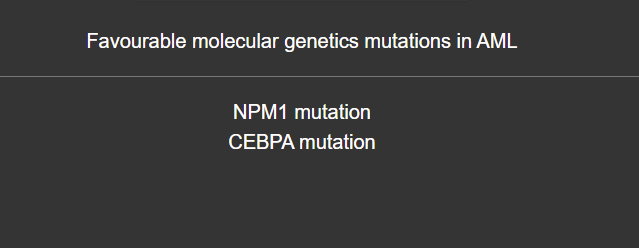
My Anki card style is meant to facilitate Type 1 recall (ie, instant without thinking). Therefore a minimum number of things should be recallable and they're usually a few words only. Explanation of concepts aren't in my cards - if I don't understand a concept, I study it such that I can give answers to the main points within a few words. For example here, I want to be able to recall some examples of favourable mutations for AML. I don't explain what a favourable genetic mutation is, I don't list them all (because that's pointless) or the effect on outcomes (those are different Anki cards) but this allows me to easily recall two favourable mutations:
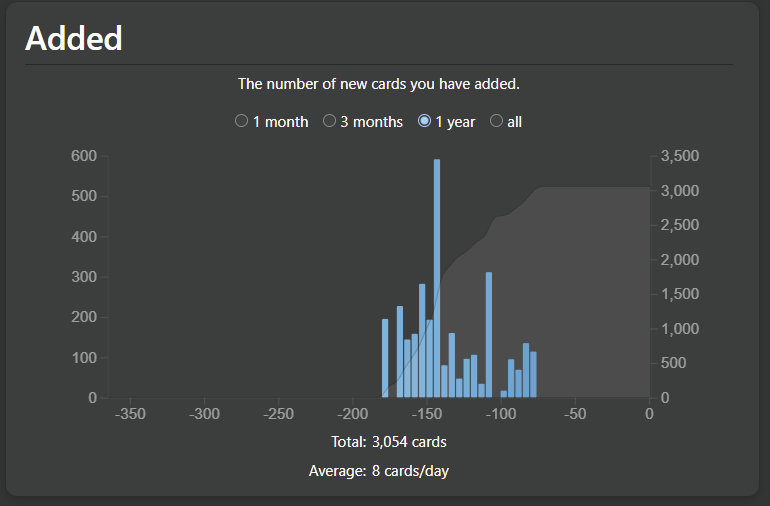
This is the number of flashcards created over time, to give you an idea of when I did my flashcard creation. You can assume that the point at which the card creation stops is March, with the first cards being made in December.
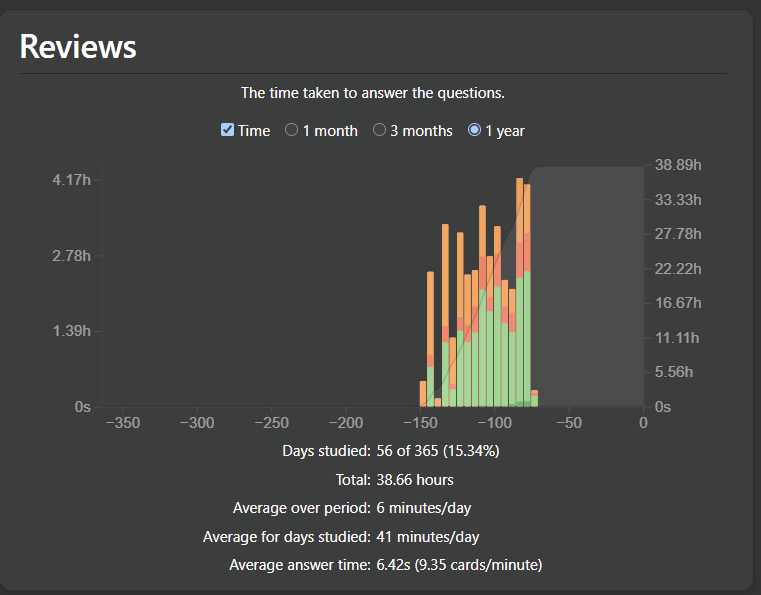
With respect to the time spent studying, here is the data:
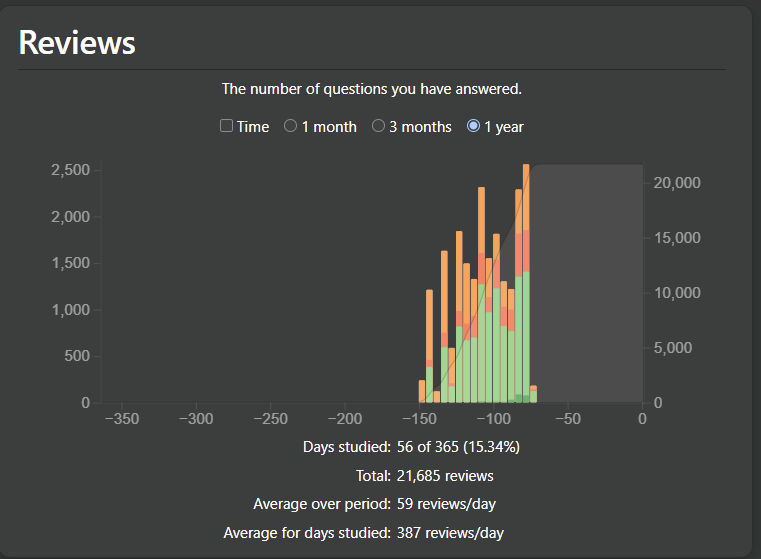
And here is the number of cards
And for funsies here is when I reviewed cards in the day. Apparently I'm an evening person.
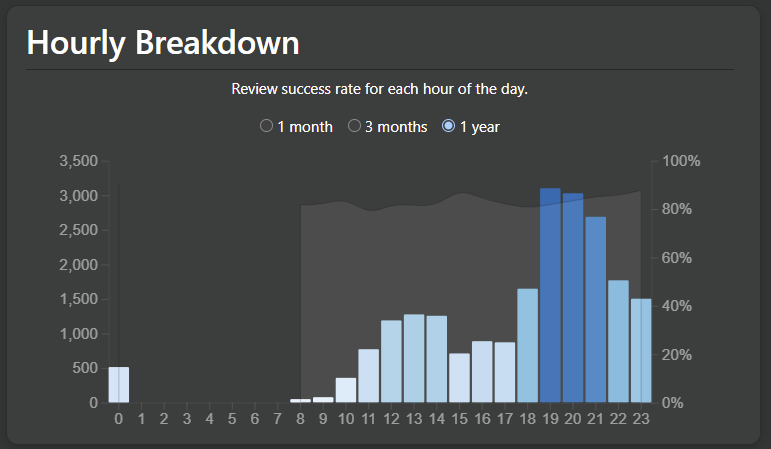
In summary, Anki allowed me to study Hoffbrand's Haematology, Haembase, Practical Haemostasis, Intermediate Transfusion course and also selected BSH guidelines in a way that allowed me to be accountable and not miss any topics. This worked for me. If you're lucky enough to have the Anki decks I made, remember I didn't include information that I already knew or was confident with. So, ymmv.
Question banks
Question banks are a staple of exam preparation. I used two - BloodAcademy and PathQuestionBank. I would say both are harder than the real exam. They do teach important topics and are a good way to integrate teaching. I don't really rate BloodAcademy's website (and probably wouldn't recommend them on that basis) but I do recommend PathQuestionBank.
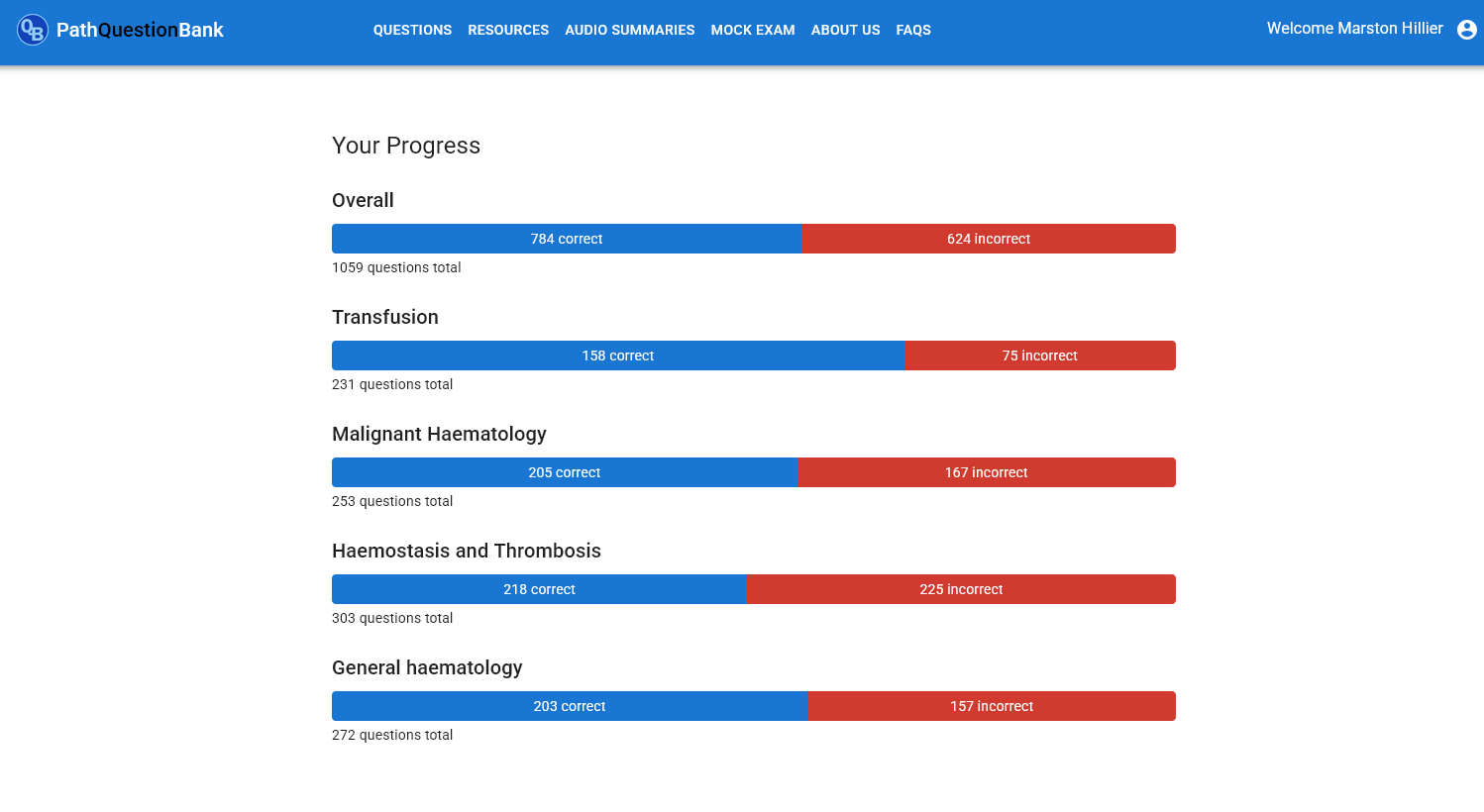
This was my score on PathQuestionBank. I tried to repeat questions I got wrong, so my pure "first attempt" percentage correct is about 5-10% lower in each section - particularly H+T/Gen Haem. Therefore, my actual first attempt overall score is just under 50%.
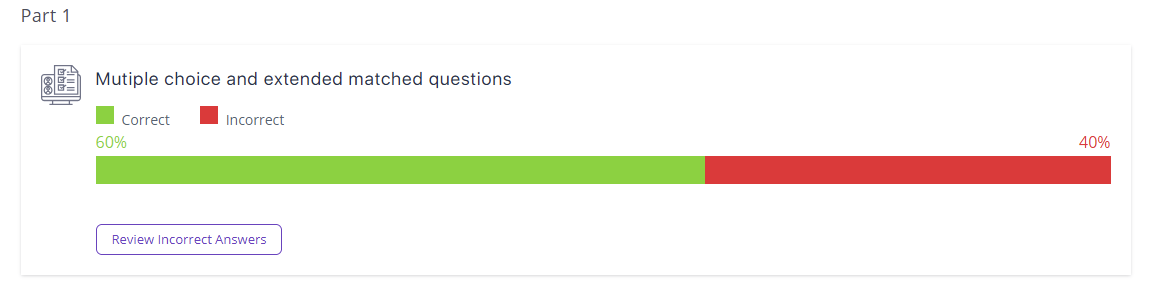
Blood academy was similar - I redid a lot of questions and would estimate my first attempt at answering questions was just under 50%.
PQB was the better learning resource. BloodAcademy was more outdated - felt like it was written >5 years ago, which in haematology time is a long time.
Summary and results
That's basically it for my preparation. Essay preparation was just using the example essays from PQB and some past essays from the FRCPath website.
My result on the MCQ was 88, where a pass mark was 70. Whatever that means. My essay result was "pass". No further feedback was given.